
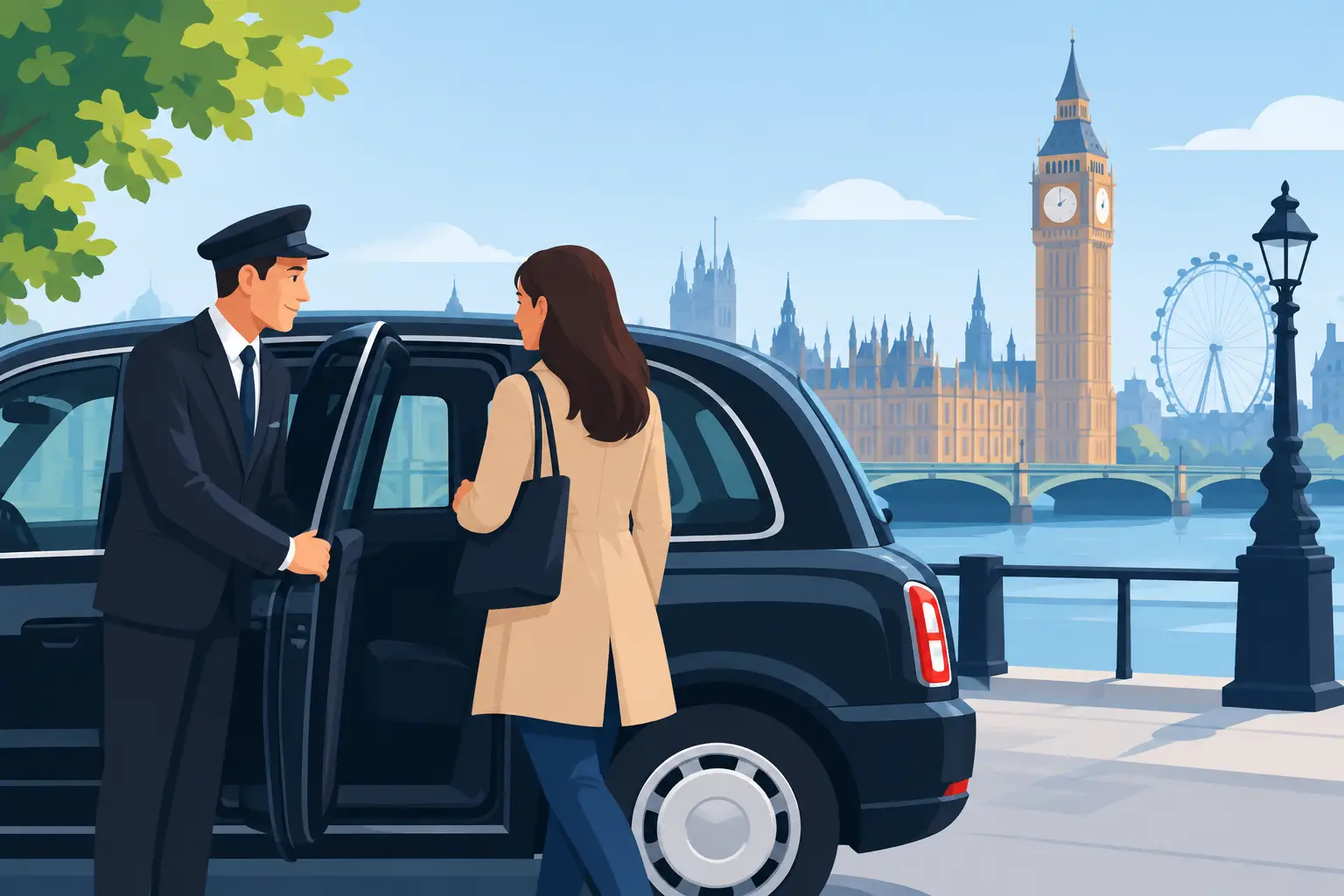
Minicab Safety Before You Travel in London
A 4.30am airport collection leaves little room for uncertainty. You may be travelling with children, carrying passports and luggage, or trying to reach Heathrow before a long-haul flight. Minicab safety starts before the car arrives: it depends on using a properly booked, licensed service with clear information about who is collecting you and when.
A private-hire journey should feel organised, not improvised. The fare, collection address, vehicle and driver arrangements should be recorded in advance, so you are not left guessing at the kerbside or accepting a ride from someone you cannot verify.
What minicab safety looks like in practice
In London, minicabs are private-hire vehicles. Unlike a black cab, they cannot legally be hailed from the street or picked up at a taxi rank. They must be booked through a licensed private-hire operator before the journey begins. That rule is not just administrative. It creates a record of the booking, the operator and the vehicle assigned to you.
When booking, provide an accurate collection point, destination, passenger number and any requirements such as a child seat or extra luggage space. A reputable operator should confirm the details and provide a clear fare or pricing basis before travel. For an airport run, tell the operator your flight number when you are being collected after landing. This allows flight monitoring and helps the driver plan for an early arrival or a delay.
Before collection, you should receive enough information to identify the vehicle and driver with confidence. This commonly includes the driver’s name, vehicle make, colour and registration number, as well as a booking reference and operator contact details. Check these details before getting in. If the car that arrives does not match, do not assume it is a harmless change. Contact the operator using the number on your confirmation and ask them to verify the replacement.
A properly licensed vehicle and driver are central to passenger protection. Licensing requirements are set by the relevant local authority, and in London private-hire drivers, vehicles and operators are regulated by Transport for London. Licensed drivers undergo required checks, and licensed vehicles are subject to standards intended to support safe passenger transport. The licence should be displayed as required, but the booking confirmation remains your first point of reference.
Book ahead rather than taking a chance
Pre-booking is one of the simplest ways to improve minicab safety. It gives you time to compare the journey details, retain written confirmation and raise questions before you travel. It also means the operator knows where you are meant to be, where you are going and which driver has been allocated.
This is especially useful for airport travel. Arrivals halls can be busy, mobile signal can be unreliable, and tired travellers are more likely to make quick decisions. A confirmed meet-and-greet arrangement removes confusion: you should know where the driver will wait, what name or booking reference they will use, and how to contact the office if you cannot locate them.
Be wary of unsolicited offers inside or outside an airport. A person who approaches you with a vehicle may not be the driver you booked, even if they know the general destination you are travelling to. Do not share your booking reference with strangers, and do not follow someone to a car simply because they say your name. Confirm the registration plate and driver details first.
Fixed-price bookings can also support safer, calmer travel. A fare agreed in advance reduces the pressure to negotiate at the end of a journey, particularly after a late flight or when you are unfamiliar with London. It is sensible to ask what the quoted price includes, such as waiting time, parking, airport drop-off charges or meet-and-greet costs. Clear pricing is not only about value. It prevents avoidable disputes when you should be focused on getting home or catching your flight.
Keep your confirmation close at hand
Save the confirmation email or text message where you can access it without searching through your inbox. It should show the collection time, address, destination and operator contact number. If your plans change, notify the operator as early as possible rather than trying to arrange a different pickup informally with the driver.
For a return airport collection, switch your phone on once you land and check for updates. Flight monitoring is useful, but it does not replace communication if you have changed terminals, have oversized baggage, or need extra time to clear passport control. An established operator will be able to advise you on the correct meeting point.
Check the vehicle before you get in
A quick check at collection takes seconds and is worth making every time. Match the registration number and vehicle description to your booking confirmation. If you are travelling alone late at night, wait in a visible, well-lit location where possible and keep your phone with you until you are safely inside the car.
Once you are in the vehicle, wear your seatbelt. Every passenger should do this, including those in the rear seats. Families should make child-seat arrangements during booking, not at the kerbside. The right option depends on a child’s age, height and the type of journey, so tell the operator what you need and allow enough time for the correct vehicle to be allocated.
A professional driver will drive attentively, respect speed limits and avoid unnecessary distractions. Passengers can help by keeping conversation considerate and avoiding requests that would encourage unsafe driving, such as speeding to make up time. If you have a concern about the route, ask politely. There may be a practical reason for a diversion, including roadworks, airport traffic or a closure, but you are entitled to understand what is happening.
Do not feel obliged to continue with a journey that makes you uncomfortable. If the driver, vehicle or pickup arrangement is not as confirmed, contact the operator. In an immediate emergency, call 999. For non-emergency concerns, keep your booking reference, the registration number, journey time and a short factual note of what occurred. These details make it easier for the operator or licensing authority to investigate.
Safety matters for drivers as well
Good minicab safety is a shared standard. Drivers need accurate passenger information, sensible waiting arrangements and the ability to contact customers at collection. A passenger who is delayed should update the office rather than leaving the driver to search a large terminal or residential street.
Treat the vehicle with respect, keep aisles clear of loose luggage and make sure bags are loaded securely. At the end of the journey, check the seats, footwells and boot before the driver leaves. Passports, work laptops and medications are commonly noticed only after the car has gone. A pre-booked journey gives you a much better chance of recovering a lost item because the operator can identify the vehicle and driver quickly.
For business travellers, a documented booking also supports duty of care. The company arranging the journey can retain the booking record, confirm the expected arrival time and receive an invoice after travel. For families, the same visibility offers reassurance when arranging transport for a relative travelling alone.
Choosing an operator for airport journeys
Price matters, but the cheapest quote is not always the best value if essential journey details are missing. Look for a licensed operator that provides a confirmed booking, fair and understandable pricing, driver and vehicle details, and a reliable contact route if plans change. Airport transfers benefit from practical extras such as flight monitoring and meet-and-greet because these address the points where travel plans most often unravel.
TipTop Minicabs provides pre-booked London airport transfers with upfront fares, licensed drivers and vehicle details sent before collection. That structure helps passengers make decisions before they leave home, rather than at the terminal or roadside.
The most reassuring journey is usually the least dramatic one: your booking is confirmed, the car is the one you expected, and the driver knows where you need to be. Take a moment to check those details before every collection, then settle in and enjoy the journey.
